

















What Is Cocaine?
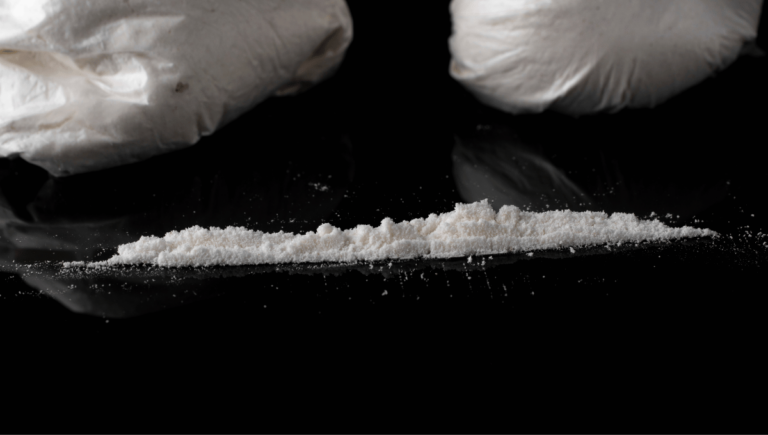
Cocaine is a powerful stimulant drug made from the coca plant, classified as a Schedule II controlled substance due to its high potential for abuse and limited medical use. It is commonly found as a white powder (cocaine hydrochloride) or a solid crystal form known as “crack.” Cocaine is snorted, smoked, injected, or applied to mucous membranes. Once used, it rapidly affects the central nervous system by increasing dopamine levels in the brain, creating intense euphoria, energy, and alertness. These effects are short-lived and lead to repeated use.
Can You Overdose on Cocaine?
Yes, you can overdose on cocaine. An overdose happens when too much cocaine overwhelms the body, leading to life-threatening effects like heart attack, stroke, seizures, or sudden death. Risks increase with high doses of cocaine, frequent use, or mixing with other drugs like fentanyl. It’s a medical emergency that requires immediate help.
What Are the Signs and Symptoms of Cocaine Overdose?
The signs and symptoms of cocaine overdose include a mix of behavioral, psychological, and physical indicators. These include extreme agitation, anxiety, paranoia, confusion, hallucinations, rapid or irregular heartbeat, chest pain, high body temperature, seizures, difficulty breathing, nausea, and loss of consciousness. If any of these symptoms occur after cocaine use, seek emergency medical help immediately.

Here are the signs and symptoms of cocaine overdose:
Behavioral and Psychological Signs and Symptoms of Cocaine Overdose:
- Anxiety, paranoia, irritability: Heightened nervousness and fear that others are watching or intending harm, accompanied by a short temper.
- Confusion, mood swings, delirium: Disorientation and rapid emotional changes result in an inability to think clearly or stay focused.
- Hallucinations, psychosis: Seeing or hearing things that aren’t real and experiencing a break from reality.
- Agitation, restlessness, aggression: Excessive movement, inability to stay calm, and potential for violent outbursts.
- Panic attacks, teeth grinding: Sudden overwhelming fear and anxiety, with physical signs like jaw clenching and grinding.
Physical Signs and Symptoms of Cocaine Overdose:
- Chest pain, high blood pressure: Strain on the heart and blood vessels that leads to a heart attack or stroke.
- Irregular or rapid heartbeat, fast breathing: Disrupted heart rhythm and increased respiratory rate due to overstimulation.
- Dilated pupils, flushed or bluish skin (cyanosis): Enlarged pupils and skin color changes from poor oxygen circulation.
- High body temperature, excessive sweating: Overheated body, accompanied by profuse sweating.
- Tremors, seizures, nausea, vomiting: Uncontrolled muscle movements and digestive distress as the body reacts to toxicity.
- Difficulty breathing, unconsciousness: Respiratory failure or loss of consciousness from lack of oxygen and organ stress.
How Much Cocaine Causes an Overdose?
The amount of cocaine that causes an overdose varies widely depending on several factors. A recreational dose is 30–60 mg when snorted, but as little as 20 mg can be dangerous, especially with high-purity cocaine or fentanyl-laced batches. Overdose risk increases with factors like drug purity, hidden adulterants, a person’s body weight, health, and tolerance. Methods like injection or smoking deliver the drug faster and raise the danger. Combining cocaine with other substances, such as alcohol, opioids, or other stimulants, further increases the risk of severe or fatal overdose.
What are the Risk Factors Influencing Cocaine Overdose?
The risk factors influencing cocaine overdose include a combination of personal, physical, and situational elements that heighten the drug’s harmful effects. These factors determine how the body responds to cocaine and significantly increase the likelihood of a life-threatening reaction, even at lower doses.
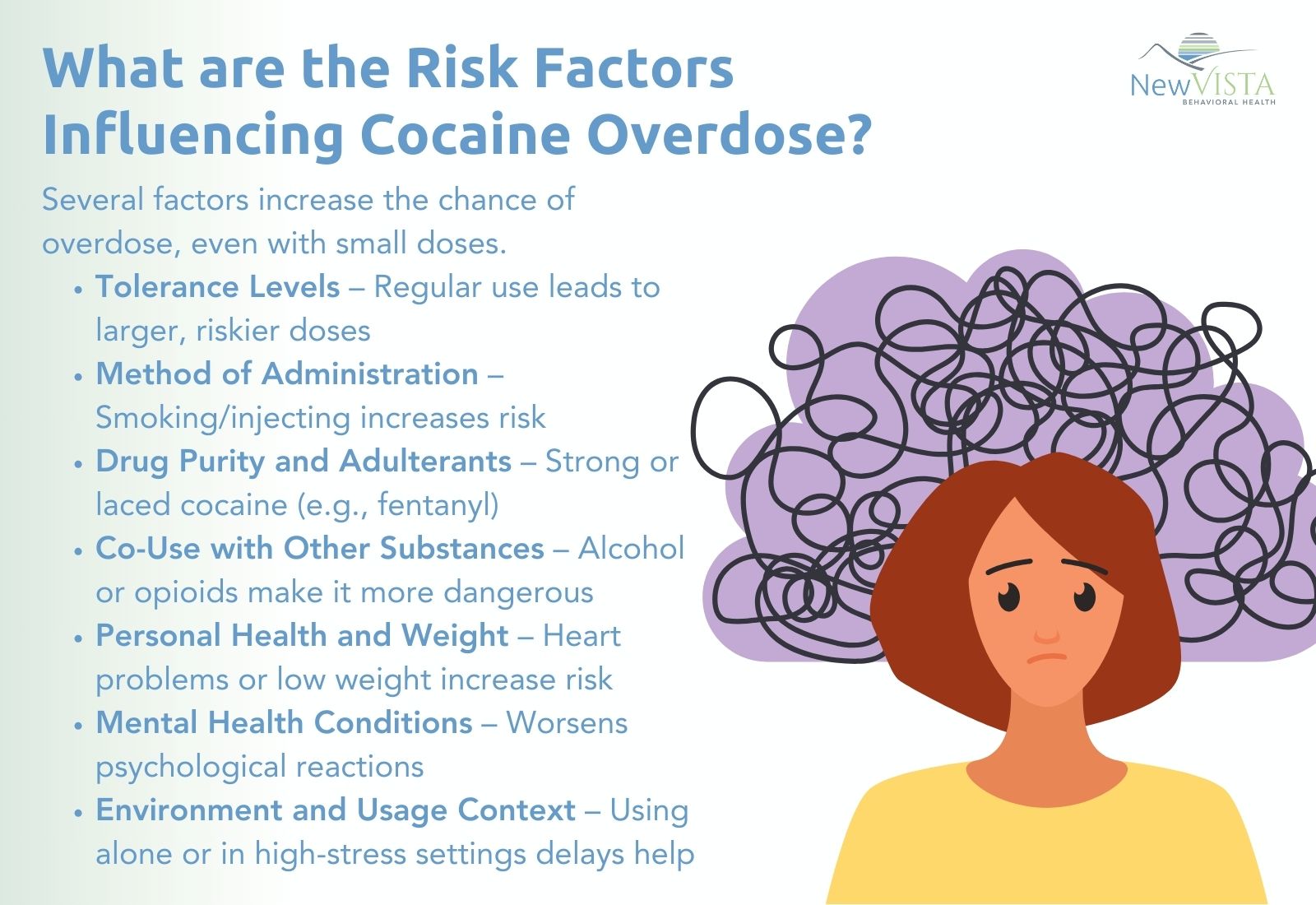
Key risk factors influencing cocaine overdose include:
- Tolerance Levels: Frequent use reduces sensitivity, leading to more dangerous doses.
- Method of Administration: Injecting or smoking cocaine delivers it rapidly to the brain, increasing overdose risk.
- Drug Purity and Adulterants: High-purity cocaine or mixtures with substances like fentanyl cause sudden toxicity.
- Co-Use with Other Substances: Combining cocaine with alcohol, opioids, or other drugs greatly increases the risk of severe reactions.
- Personal Health and Weight: Pre-existing heart conditions, high blood pressure, or low body weight worsen the effects.
- Mental Health Conditions: Anxiety, depression, or psychosis intensify behavioral and psychological symptoms.
- Environment and Usage Context: Using alone, in unfamiliar settings, or under stress, delayed help during an overdose.
What Happens During a Cocaine Overdose?
During a cocaine overdose, the body is overwhelmed by the drug’s powerful stimulant effects. This leads to a dangerous overactivation of the brain and vital organs, putting intense stress on the heart, lungs, and nervous system. Without immediate medical intervention, the consequences are severe and life-threatening.

A cocaine overdose leads to:
- Cardiac arrest: Sudden heart failure due to extreme strain on the cardiovascular system.
- Respiratory failure: Breathing slows or stops, cutting off oxygen to the body and brain.
- Coma: Loss of consciousness from brain dysfunction or lack of oxygen.
- Loss of vital functions: The body shuts down critical systems, resulting in death if untreated.
What Are the Treatments for Cocaine Overdose?
The treatment of cocaine overdose includes immediate medical intervention followed by long-term support to address physical, psychological, and behavioral effects. Effective treatment focuses not only on stabilizing the individual but also on promoting lasting recovery through a range of therapeutic options.

The treatment of cocaine overdose includes:
- Detox Programs: Supervised medical care that helps individuals safely withdraw from cocaine under the watch of healthcare professionals. Medical detox reduces the risk of complications and prepares the person for further treatment.
- Residential Treatment: Inpatient rehab that provides 24/7 structured care, therapy, and support in a controlled environment. It is ideal for individuals with severe addiction or co-occurring mental health disorders.
- Outpatient and Telehealth Programs: These programs offer flexibility by allowing individuals to attend therapy and counseling sessions while living at home. Telehealth options provide remote access to care, making treatment more accessible and convenient. New Vista Behavioral Health offers both outpatient and telehealth services, ensuring personalized, convenient support for individuals on their recovery journey.
- Therapy: Behavioral therapies such as cognitive behavioral therapy (CBT) help individuals identify and change negative thought patterns and behaviors. Therapy also supports emotional healing and relapse prevention.
- Medications: Although there is no specific medication to reverse a cocaine overdose, certain medications can help manage withdrawal symptoms, reduce cravings, and treat related mental health conditions like depression or anxiety.
How to Choose the Treatment Center for Cocaine Overdose?
To choose the right treatment center for cocaine overdose is an important step in recovery from cocaine overdose and addiction. The best choice depends on individual needs, the severity of addiction, and the type of support required.
Here’s what to consider:
- Medical Supervision: Choose a center with 24/7 medical staff, especially if detox or intensive care is needed after overdose.
- Accreditation and Licensing: Look for accredited facilities with certified professionals to ensure quality and safety.
- Personalized Treatment Plans: Effective centers offer individualized care tailored to the person’s health, history, and goals.
- Range of Services: A good program should include detox, therapy, outpatient options, telehealth, and aftercare support.
- Mental Health Support: Ensure the center treats co-occurring mental health conditions, which are common in cocaine addiction.
- Family Involvement: Programs that involve family or offer family counseling strengthen recovery outcomes.
- Location and Cost: Consider the convenience of the center’s location and whether it accepts insurance or offers financial assistance.
Making an informed choice improves the chances of a successful and lasting recovery.