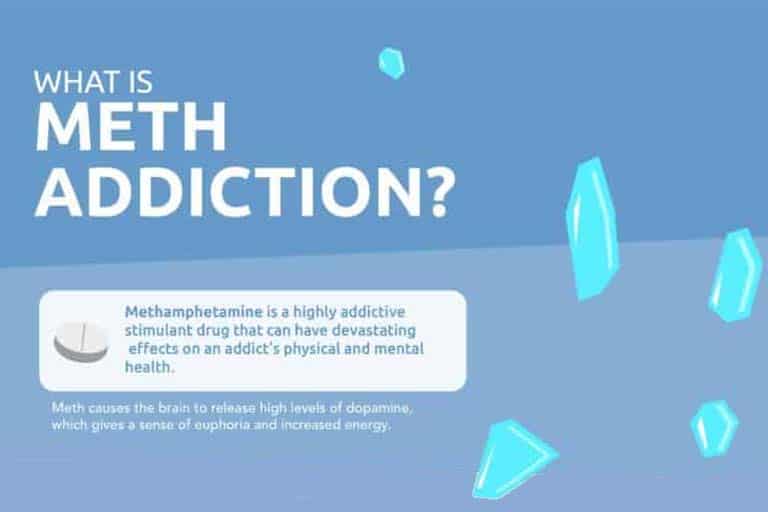




Meth detox refers to a medically supervised process of helping a person stop using methamphetamine and managing the withdrawal symptoms safely. It’s the first critical phase in treating meth addiction and restoring physical and psychological stability. In Ohio, methamphetamine abuse has grown sharply. By 2021, meth accounted for 25% of overdose deaths in Ohio, up from just 3.1% in 2015. Availability of crystal meth and related labs has increased across most regions in the state.
Meth Detox protocols and procedures are vital because withdrawal symptoms are intense, physically painful, and psychologically distressing. Without proper support, they drive relapse. Meth detox must address physical symptoms like fatigue, agitation, and appetite changes. It must also cover psychological symptoms such as anxiety, depression, and cravings, and ensure medical safety throughout the process.
What Is Meth Detox?
Meth detox is a procedure you undergo to stop using meth and safely get through. The process involves an addiction treatment center and professional medical supervision to keep you comfortable. It also decreases the withdrawal symptoms as you go through the withdrawal process. However, if you decide to stop using meth without having any form of assistance, there’s a higher chance of experiencing severe withdrawal symptoms. It is not safe to go through them alone, as that results in relapse.
What is The Process of Meth Detox?
The process of meth detox includes evaluation, stabilization, and transition into further treatment. The focus of every detox process is for patients to be safe when undergoing treatment. The process involved in detox is grouped into 3 stages to guarantee the right form of care for them.
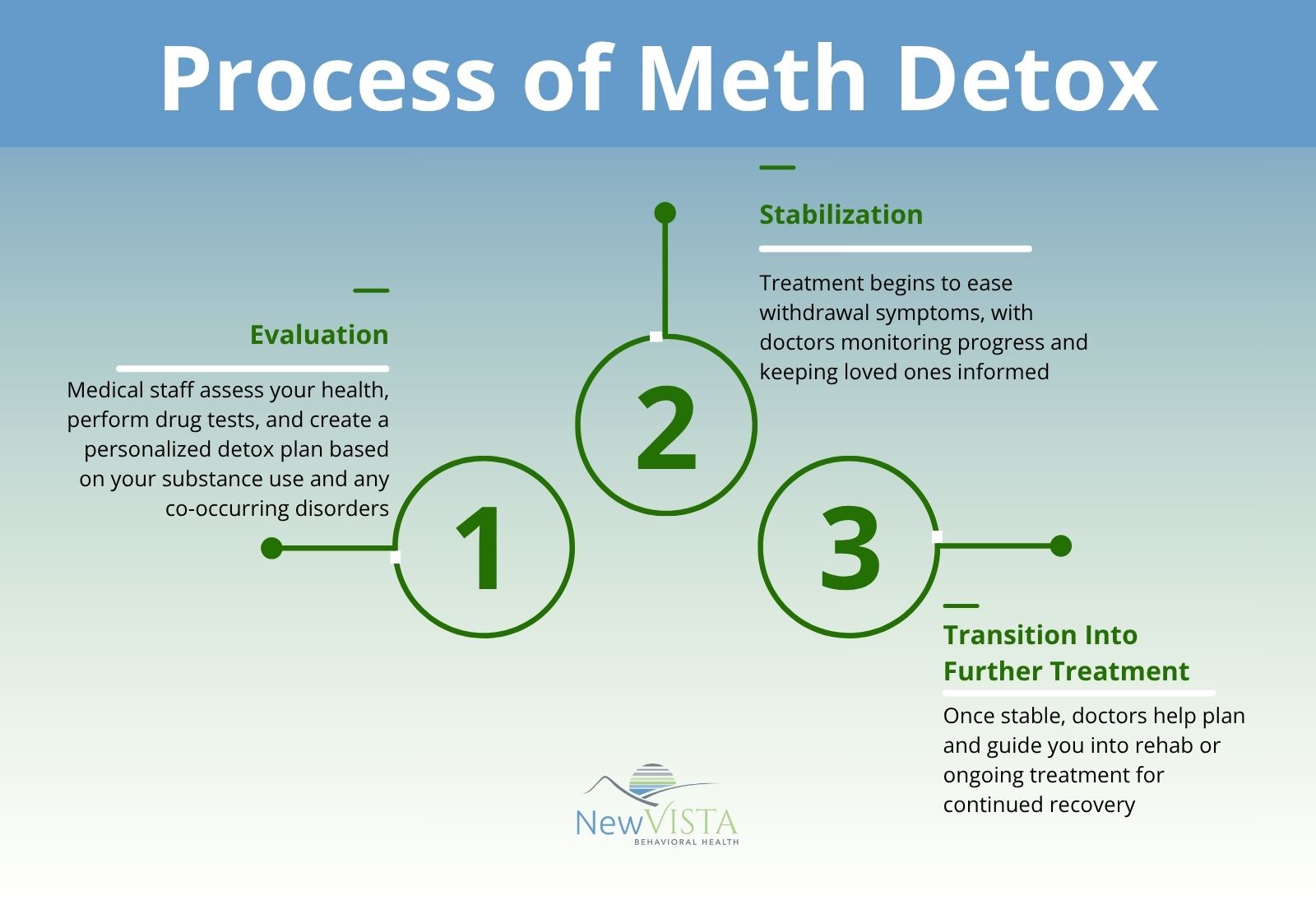
Here are the three important steps involved in the process of meth detox:
Evaluation
Upon admission, a group of medical personnel will examine your health and well-being. They usually carry out a urine drug screening test to ascertain the amount of meth that you have consumed recently. From there, the treatment team develops a detox plan that fits that specific need.
The doctor asks you questions about your past and present substance abuse. This is very important in setting up a patient’s long-term recovery program. It is also very helpful for doctors to be aware of any co-occurring disorders of a patient, as these influence the type of detox treatment a patient will be given.
Stabilization
Most people who enter a detox center are already experiencing the peak of their withdrawal symptoms. As soon as the evaluation stage is over, treatment begins to help them become more comfortable. Doctors monitor thoroughly, and the treatment is adjusted as the symptoms improve. The other medical staff keep the loved ones fully informed of every progress.
Transition Into Further Treatment
Doctors discuss the next steps with you when the detox process is almost complete. Detox is just the first step in meth addiction treatment, and it is recommended that you continue your recovery in a rehab facility. The medical team also helps you move into the next stage on track toward sobriety.
What Are the Withdrawal Symptoms During Meth Detox?
The withdrawal symptoms during meth detox include many psychological symptoms, physical symptoms, and behavioral symptoms. Carrying out detoxification on your own is not advisable. Medical supervision ensures safety, comfort, and proper management of both physical and psychological symptoms. Professional detox also reduces the risk of relapse and prepares individuals for ongoing recovery treatment.

The signs and symptoms of meth withdrawal include:
- Agitation and Anxiety: Restlessness and heightened nervousness are common during detox.
- Fatigue and Extreme Tiredness: The body feels drained and weak due to meth leaving the system.
- Body Aches and Tremors: Muscle pain and shaking occur as the body adjusts.
- Insomnia and Sleep Disturbances: Difficulty falling or staying asleep is frequent in early withdrawal.
- Increased or Lost Appetite: Eating patterns swing between overeating and an inability to eat.
- Confusion and Poor Concentration: Mental clarity is reduced, making focus difficult.
- Depression and Loss of Motivation: Low mood and lack of drive are common emotional symptoms.
- Paranoia and Hallucinations: Some individuals experience distorted thoughts or false perceptions.
- Nausea and Vomiting: Digestive distress is frequent during the detox phase.
- Excessive Sweating and Fever: The body reacts physically as it clears out toxins.
- Seizures: In severe cases, uncontrolled brain activity occurs, requiring urgent care.
- Suicidal Thoughts and Worsening Mental Health: Psychological struggles intensify, making support vital.
Will I stop tweaking during detox?
Yes, you will stop tweaking during detox. It takes some time as the body and brain adjust to being without meth. Tweaking is linked to extreme agitation, insomnia, and compulsive behavior caused by prolonged meth use. With medical supervision and supportive care in detox, these episodes gradually lessen in intensity until they subside.
Will I ever feel normal again?
Yes, you will feel normal again after meth detox and recovery. It takes time and consistent treatment. The brain and body need to heal from the damage caused by meth use, which involves weeks to months of recovery. With therapy, medical support, and healthy lifestyle changes, most people gradually regain stability, clarity, and a sense of normalcy.
What Medications Are Used During Meth Detox?
The medications used during meth detox include Wellbutrin (bupropion), Provigil (modafinil), Selective Serotonin Reuptake Inhibitors (SSRIs), and Remeron (mirtazapine). These drugs help reduce cravings, improve mood, and manage withdrawal symptoms like depression, fatigue, and anxiety. They are prescribed under medical supervision to ensure safety and effectiveness.
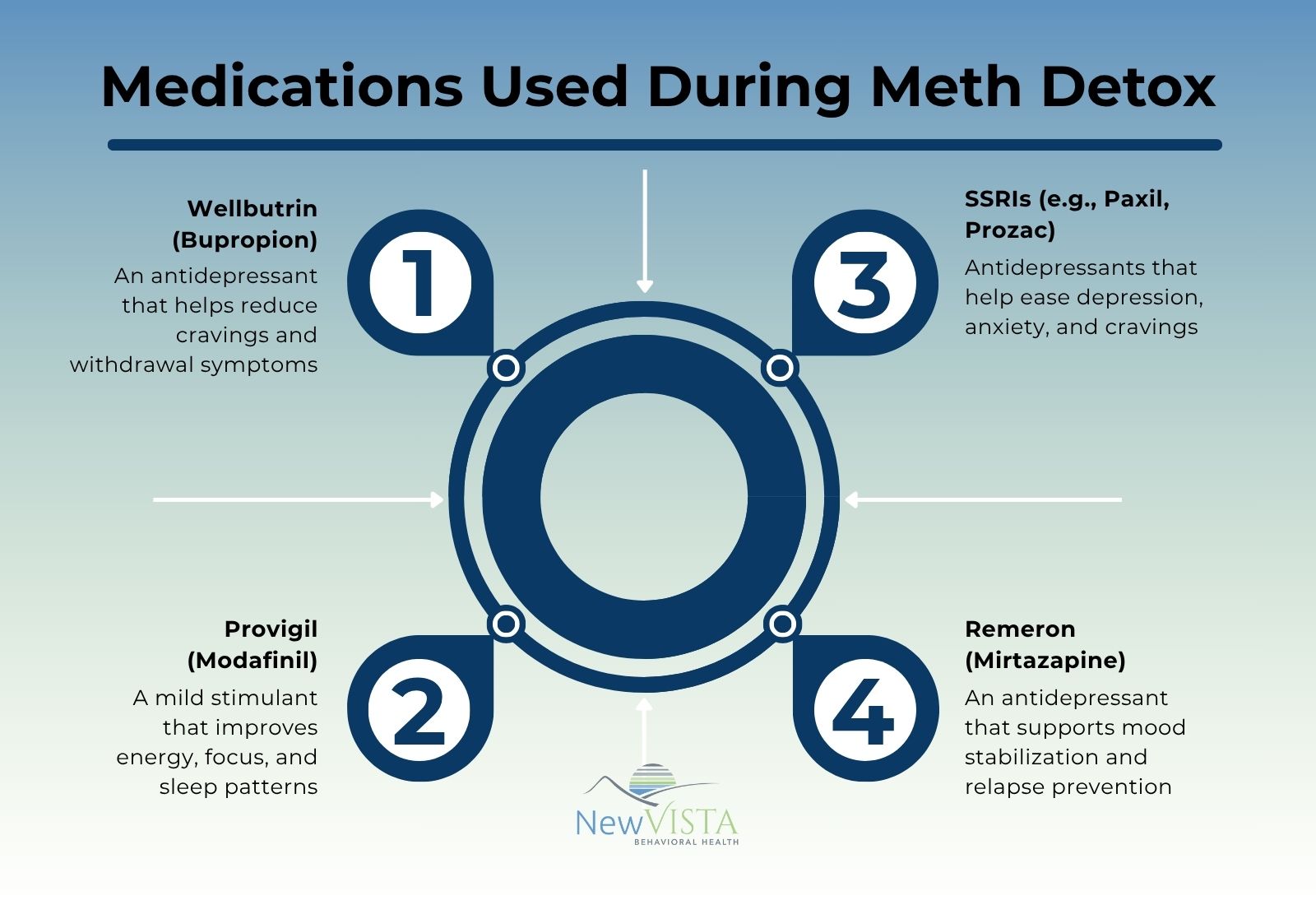
Some medications that help you manage some of the symptoms during withdrawal are:
Wellbutrin (bupropion):
Wellbutrin is an antidepressant drug that is used in smoking cessation programs. It is also useful in reducing symptoms of withdrawal in patients who have abused crystal meth and reducing the cravings associated with the withdrawal process.
Provigil (modafinil):
Provigil is a mild stimulant medication used in the treatment of ADHD and narcolepsy. Provigil has a mild stimulant property that helps reduce issues with sleep patterns, increases energy, and enhances concentration in individuals recovering from sleep disorders.
Selective Serotonin Reuptake Inhibitors:
Selective Serotonin Reuptake Inhibitors are a specific type of antidepressant, and Paxil (paroxetine) is a known example. It has been shown to relieve cravings in abstinent meth users undergoing withdrawal. Prozac (fluoxetine) is also a selective serotonin reuptake inhibitor that is useful in the treatment of crystal meth addiction.
Remeron (mirtazapine):
Remeron is an antidepressant with a mechanism of action on both serotonin and norepinephrine. It is useful in relapse prevention. Several medications are used to treat certain symptoms that appear during meth withdrawal.
What is the Meth Withdrawal Timeline During Detox?
The meth withdrawal timeline during detox varies by individual. It follows a predictable pattern as the body clears the drug and begins to heal. Symptoms start within hours of last use, peak in severity during the first week, and gradually lessen over the following weeks, though some psychological effects may linger longer.
Here is the meth withdrawal timeline:
- First 24–48 Hours: Initial crash occurs with extreme fatigue, depression, and increased sleep.
- Days 3–10: Symptoms peak, including anxiety, intense cravings, mood swings, and sleep disturbances.
- Weeks 2–3: Physical symptoms ease, but psychological symptoms like depression, paranoia, and low motivation may persist.
- Weeks 4 and Beyond: Most acute symptoms fade, but post-acute withdrawal syndrome (PAWS) with cravings, mood issues, and sleep problems continues for months.
Find Help Through Our Meth Detox Program
A detox is a difficult step to take in getting clean, but it is the most effective way to treat drug addiction. After detox, the next step is to go to rehab to tackle all underlying psychological problems caused by meth addiction. If you or a loved one is struggling with meth addiction, we are available to help; all you have to do is contact us to get Meth treatment and rehab.